Star Trek, Oprah, and the Key to Connection
This is her show’s 40th and the original series’ 60th anniversaries

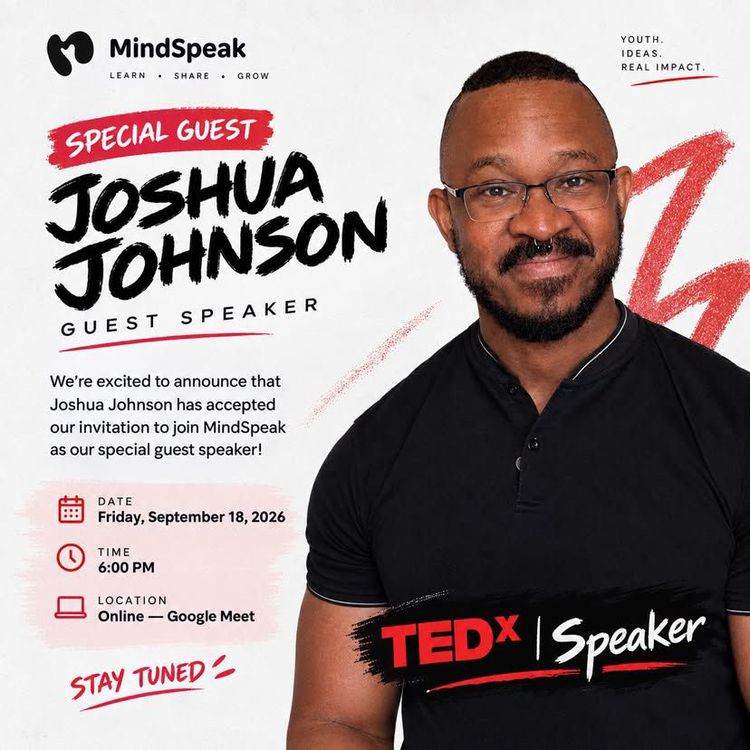
I always wanted to be a starship captain. And I wanted to be Oprah Winfrey.
Neither dream has left me… and now, I think I know why.
Today marked two milestones in television history: perhaps from a bygone era when we looked to that medium as a great unifier. 40 years ago today — September 8th, 1986 — was the debut of The Oprah Winfrey Show. And the original series of Star Trek premiered on NBC 60 years ago: September 8th, 1966. Both shows would revolutionize television and popular culture in ways we don’t always take stock of.
Like many 80s kids, my first connection to the adventures of the Enterprise was the syndicated series Star Trek: The Next Generation. That overlapped with Oprah’s dominance on TV, making the 80s and early 90s especially formative for me. I knew I wanted to be on radio and TV since I was about 10 years old. Unlike a lot of my peers, who wanted to be hip hop stars or athletes, I wanted to be a host. A leader.
A captain.
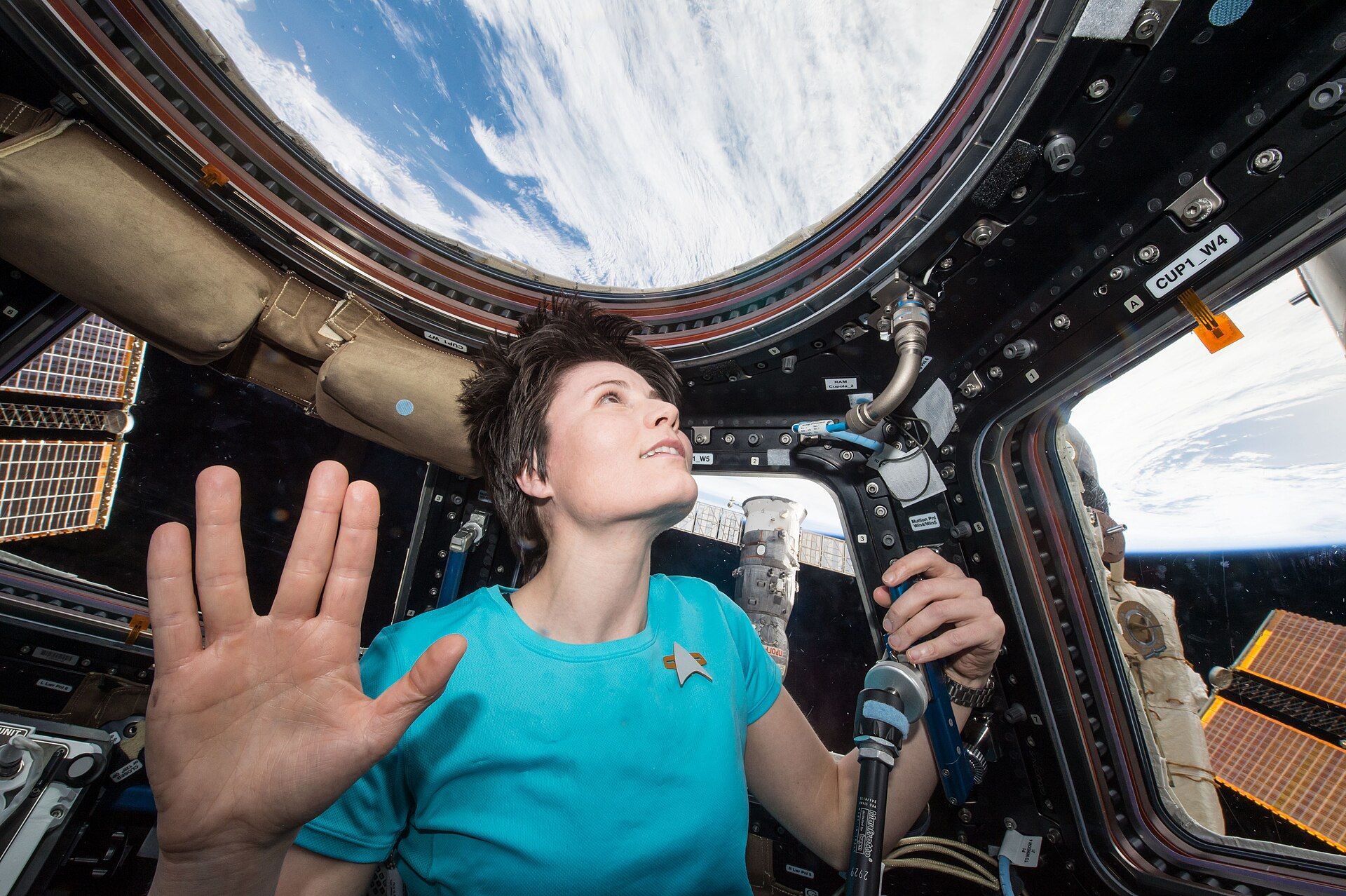
People who love Star Trek tend to idealize its values: courage, truth, curiosity, diplomacy, diversity, teamwork, community building, and a durable idealism that tomorrow can be better than today. What these series and movies represent can feel lost sometimes in today’s society, but it’s not dead. Just a bit too dormant.
What matters more to you: the problems, or the possibilities?
It can feel like another dimension of reality, another quadrant of the galaxy, where people actually sit side-by-side and have meaningful conversations about touchy issues. Where we come together with others from every walk and way of life to achieve the same thing, under an agreed-upon set of principles, giving our all for one another in extraordinary ways. Where the differences between us are our strongest reason to connect, not to cloister.
And let’s be honest: both shows just made us feel good. There’s something that Silicon Valley and today’s media executives, with their rush to turn everything into automated AI slop, just don’t understand (or perhaps never knew) about people: we like to be together. Watching Oprah was most rewarding when you could talk to someone about it later. Star Trek is more than a franchise: it’s a fandom, and the shared experiences of people doing Vulcan salutes and getting insignia tattoos creates a sense of togetherness. Life is better lived with people who delight in the things that delight you.
We could use a lot more delight these days. It’s still there, but hard to find sometimes.
The Oprah Winfrey Show was a hit from early on, beating Phil Donahue as the #1 talk show on television. Winfrey recalls that the man who hired her, Dennis Swanson, told her not to worry about beating Donahue in the ratings. “Just be yourself,” he said. Today it seems obvious: of course people liked Oprah, but at the time it seemed revolutionary.

Just as it seemed revolutionary (if not extreme) to have a crew of Black, Asian, Russian, American and alien leaders working together in peaceful exploration. But that’s the thing about doing truly amazing things: they only work when you come together with people different from yourself. Nothing big gets done alone.
Yes, Oprah was absolutely the star of her show, but she alone wasn’t enough. The variety she brought to daytime was what hooked viewers. One day she’d be speaking to a studio full of men who had all been abused as boys. The next day she’d have Lady Gaga playing a piano shaped like a giant high-heeled shoe. Then, “Favorite Things.” What a galaxy to explore, but it meant nothing if we didn’t all come along for the ride.
On the very first episode of her national show, Winfrey said, “This show always allows people, hopefully, to understand the power they have to change their own lives. If there’s one thread running through each show we do, it is the message that you — YOU — are not alone.”
I remember watching the finale of Oprah in my San Francisco apartment. It was May of 2011, 15 years ago. I taped the episode because I knew I’d want to see it over and over. Unlike the big celebration the day before — an unreasonably massive, star-studded surprise party at Chicago’s United Center — this was just her, alone onstage, sharing her insights and wisdom one last time. One insight among many reshaped how I interviewed every person since… and how I saw myself.
Winfrey said that in her 25 years of doing that program – 4,561 episodes, nearly 30,000 guests – every single guest was looking for the same thing: validation. Even Beyonce looked over at Oprah after the show and asked, “Was I good?” As Oprah put it, it’s as if we’re all asking, “Do you see me? Do you hear me? And does what I say mean anything to you?”
In a way, the officers of Starfleet are also doing the work of validation. That is the point of choosing “to explore strange new worlds, to seek out new life and new civilizations.” The strangeness is a good reason to explore… not to evade. The newness is why we seek them… not shun them. We run to what’s new because it’s new, and because it’s inherently worth seeing.
Fans loved Oprah and Star Trek because they gave people something to aspire to. No one but evangelists were urging TV audiences to “Live Your Best Life” before Winfrey started doing it. And few shows were as pointedly idealistic as Star Trek, but that’s how its creator Gene Roddenberry wanted it. He added a whole new lexicon as well: “phasers on stun”, “warp speed”, “energize”, etc.
Here’s a term you might not know: IDIC (pronounced “ID-ick”). It was Roddenberry’s vision of the vastness of life in the galaxy. Infinite Diversity in Infinite Combinations. Simply put: if you can imagine its existence, it might just exist. And that diversity, if we embrace it, can make our lives easier, better and vastly more interesting. It allows us to embrace our differences and our commonalities, forming an enticing paradox that connects us in ways that are intriguing and enriching. Variety is the spice of life, and connection gives us more to savor.
Life is better lived with people who
delight in the things that delight you.
…But not anymore, right? Not with everything going on in the world: that can’t still be possible. Both Oprah and Star Trek seem impossibly good, far too good to be true, and in these cynical times it might seem foolish to champion them or even be fans of them. Maybe it is naive to believe.
Then again, Oprah was born into poverty in the segregated south, abused by relatives, never expected to succeed on television as an overweight Black woman. Star Trek debuted in the mid-60s, in an era when the Rev. Dr. Martin Luther King Jr. was a fan of the show in Season One, then was assassinated before Season Three. We have never had either cynicism or idealism: our existence is a Möbius strip of both. Which side of it are we walking at any given time?
That’s the trick. It’s only got one side: we choose to see it as two.
That these icons all seem too good to be true misses the point. You’re not supposed to believe in Oprah, or in Captain Picard. You’re supposed to believe in you. And if a nudge from them makes you believe in yourself, then that is what saves the world… and the galaxy… and each other.
Each of us faces our own final frontier: either the one outside of us that takes courage to explore, or the one inside of us that takes compassion to embrace. Today we find ourselves estranged from our fellow citizens and human beings, even unsure of who we are and whether the things we stand for still hold true. Perhaps the question for us now is simple:
Does that matter?
Do the difficulties we face matter more than the growth we seek? Does the disapproval of others matter more than the opportunity for transformation? Do the barriers to connection matter more than the impact we could have by touching someone else’s life? What matters more to you: the problems, or the possibilities?
I’m grateful to be on my own entrepreneurial journey nowadays, but if someone dropped an Oprah-esque gig in my lap I’d be hard-pressed to reject it. Practically the only other job I’d want more is… you guessed it… captain of a starship. Anywhere that I can lead a diverse group of committed people to do great things, I’m all in. If you’ve found that in your life, hold onto it as hard as you can. I’ve gotten the chance to do that a few times in my career, and I miss it dearly. Not the job itself, nor the status it brought, but the community of people I was lucky enough to help guide.
Our better future begins the moment we resolve to connect, and it accelerates when we stop viewing differences as disadvantages. You have what it takes to go boldly. To speak, listen, be heard and make meaning. Let’s lay in a new course for a better, more connected, more peaceful world.
Engage.