
My (Imaginary) 2024 Commencement Address
With universities in turmoil, here's the impact I'd encourage graduates to make

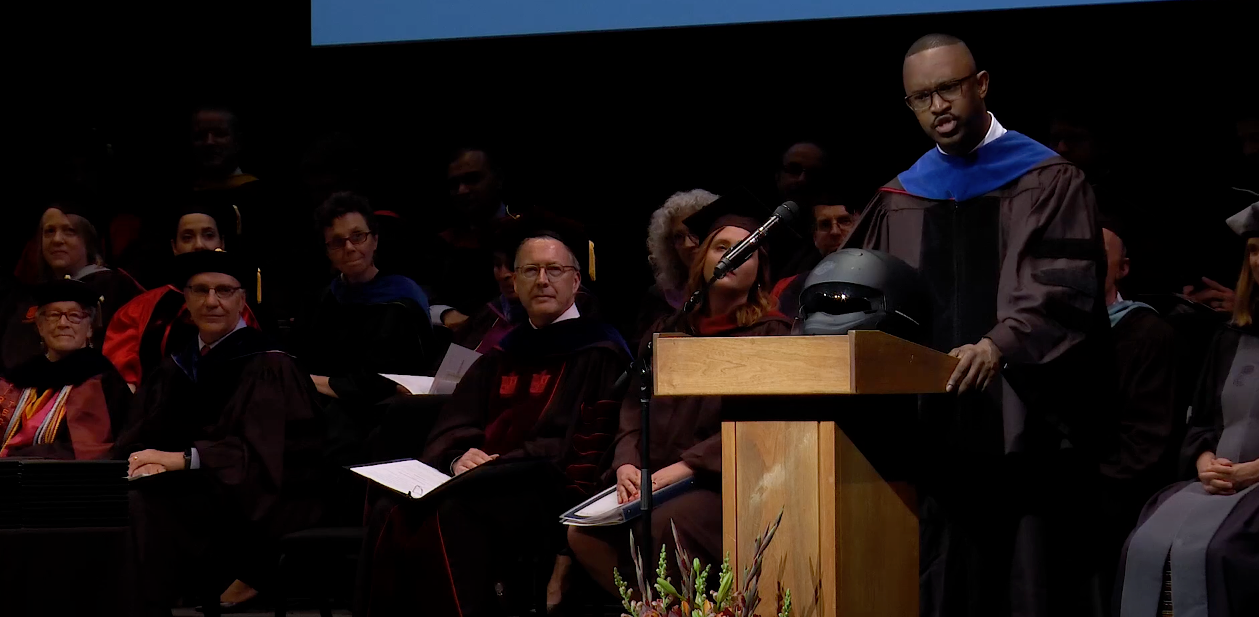
It’s graduation season, but many students don’t feel like celebrating. Some colleges and universities have been overwhelmed with protests and police clashes since Hamas attacked Israel. Eager young adults have become political punching bags in the debate over Gaza as their schools deal with antisemitism.
I’ve given one commencement speech, for Virginia Tech in 2019. If I could give an address today — in light of all this turmoil — it might go like this:
Hello, Class of 2024!
Thank you, President Fidgetfuss and Dean Salmonflapper, for inviting me on this special day. I’m delighted to be here at Perfunctory Polytechnic, home of the Fighting Astrolabes.
[pause for “Woo!”]
Some of you have sacrificed more than we know, believing that it would all pay off. Today is the beginning of that payoff, and you deserve to celebrate.
Payoff is what I want to talk to you about: the payoff we get from the things that matter to us.
I’m a “results” guy. I don’t want to waste my time on things that do not, will not or cannot work. Life is too short. Results have weighed heavily on my mind this year because of the election, our changing climate, and of course the war in Gaza.
Some of you have been active in responding to these issues. But which ones will work? What can you do that will get the most results in the least time?
The good news is: for most of the challenges you will face in life, results are possible. People still can be persuaded, people still do care, and the overwhelming majority of people you will meet in your life mean you no harm.
In fact, most people are not even thinking about you. They have their own problems to think about! You are just a background extra in the movie of their lives… and they are always the star.
Most people are just trying to get through the day. And here’s more good news: if what you want from them fits into what they want for themselves, or what they want for the people who matter to them… they might just help you.
A ten-point plan may have lots of good ideas on it. Which one do you want first?
History shows us why some social movements succeeded: like the fight against Apartheid in South Africa, the sit-ins and boycotts of the Civil Rights Movement, or same-sex marriage legalization. Three reasons in particular stand out to me. They might help you fight for what you believe in.
First, each movement found ways to draw people in. Nelson Mandela was about as inspirational a figure as anyone could ask for. Seeing Black protesters dragged away from lunch counters, for peacefully doing something Whites could do, slowly irritated the public at the indecency of it all. And opposition toward marriage equality shifted to curiosity as more couples publicly applied for marriage licenses. That’s probably when many people saw an actual gay or lesbian couple for the first time.
I’ve learned that when I armor up to deal with others, they armor up to deal with me. It’s only when I put my armor down — when I get vulnerable and patient and real — that I have any chance of making them do the same. That whole “equal and opposite reaction” thing is a stronger law of nature than you might realize.
The second thing these movements had in common was they were admirable. In his book Start With Why, Simon Sinek observed that people don’t buy into what you do. They buy into why you do it. What you do, proves what you believe. Many of you will leave here to fight for what you believe in. But how can your causes be just, unless your actions are justified?
Consider how many movements modeled the kind of world they wanted to create. If you want to live in a world where violence is not used to suppress human rights, then you must be nonviolent. If you want your loving relationships respected, then you cannot speak hate onto others. You simply invite them to understand that love for themselves. The real stories of real couples accelerated the marriage equality movement like nothing else could.
Granted, these movements were highly controversial at their peaks. Plenty of civil rights leaders thought that Dr. King was agitating Southern Whites unnecessarily and making things worse. Same-sex marriage was considered a bridge too far even by some LGBTQ+ rights advocates. And Mandela had plenty of critics, Black and White. But disagreement is normal and, in fact, it’s useful: sometimes it reveals flaws in your own arguments that you can improve.
The third thing they have in common — and this is the big one —
They were simple. Not “easy”, but simple. Clear. You could boil these huge fights down to a word or a phrase.
What was the fight against Apartheid about? Freedom. What was the Civil Rights Movement about? Equality. What was the marriage equality movement about? Love. I mean, think about the slogan “Love Is Love”. Simple, powerful. These values have deep, clear meaning to get everyday people interested and willing to listen.
A ten-point plan may have lots of good ideas on it — and all ten points might be worth doing — but which one do you want first? If I can only help with one, which one do you need most urgently? What if I only agree with two points? If I cannot do everything… will I avoid doing anything?
Recently on my show The Night Light I spoke with an author about a little-known but amazingly successful youth movement: the Wide Awakes. Back in 1860 these working class twenty-somethings formed a paramilitary club to physically protect anti-slavery activists. At the time the Democratic Party ruled national politics, controlled by a small, wealthy, pro-slavery bloc. Most Americans were sick of it, but they could not form a strong enough coalition to throw those Democrats out of office. The recently formed Republican Party was eager to do that.
That is where the Wide Awakes came in. They united all kinds of people in their disgust at Democrats. Members ranged from free Blacks in Massachusetts, to the group’s virulently racist founders in Hartford, Connecticut… to even a Saint Louis chapter leader who would later join the Ku Klux Klan! How in the world did they all come together?
Simple. Anti-slavery. Blacks opposed it for obvious reasons. Some Whites opposed it because it represented a corrupt political machine that controlled their lives. Others opposed it because it threatened to pull the country apart. And here’s the key: the Wide Awakes did not make people agree with one another on their ideology. Just on the results. Elect Abraham Lincoln; end slavery. That was it.
And they won.
Too often we prevent our own success by trying to do too much at once. You can have that ten-point plan… but I would be much more likely to support the other nine, once you prove that you can achieve even one.
Some of you will succeed in life for no other reason than focus. You make tough choices about what to do and, more importantly, what not to do. Simplicity is a sign of maturity.
Remember, most people are busy starring in the movie of their lives. Few will rewrite their scripts just for you, but they might add a line.
Or even a word. Freedom. Equality. Love.
And for Gaza? For the Palestinian people struggling to survive? What’s the word there?
Simple.
Life. I want everyone to live.
EVERYONE.
When a movement or a project or an ad campaign or a grant proposal or a business deal starts with something people already feel deeply about — and inspires them to draw closer, instead of demanding they fall in line — amazing things can happen.
Results are possible. People do care. Most of them mean you no harm, and plenty of them actually want to support you.
No one said it better than Fred Rogers, a pioneer of children’s television. “Mister Rogers” once shared the advice his mother gave him as a boy, whenever he saw catastrophe in the world or turmoil on the news.
“Always look for the helpers,” she said. “There will always be helpers, just on the sidelines. …because if you look for the helpers, you’ll know that there’s hope.”
You give me hope, just as you have given me the honor of spending time with you today. Thank you for listening, and Congratulations to the Class of 2024! Go ‘Labes!